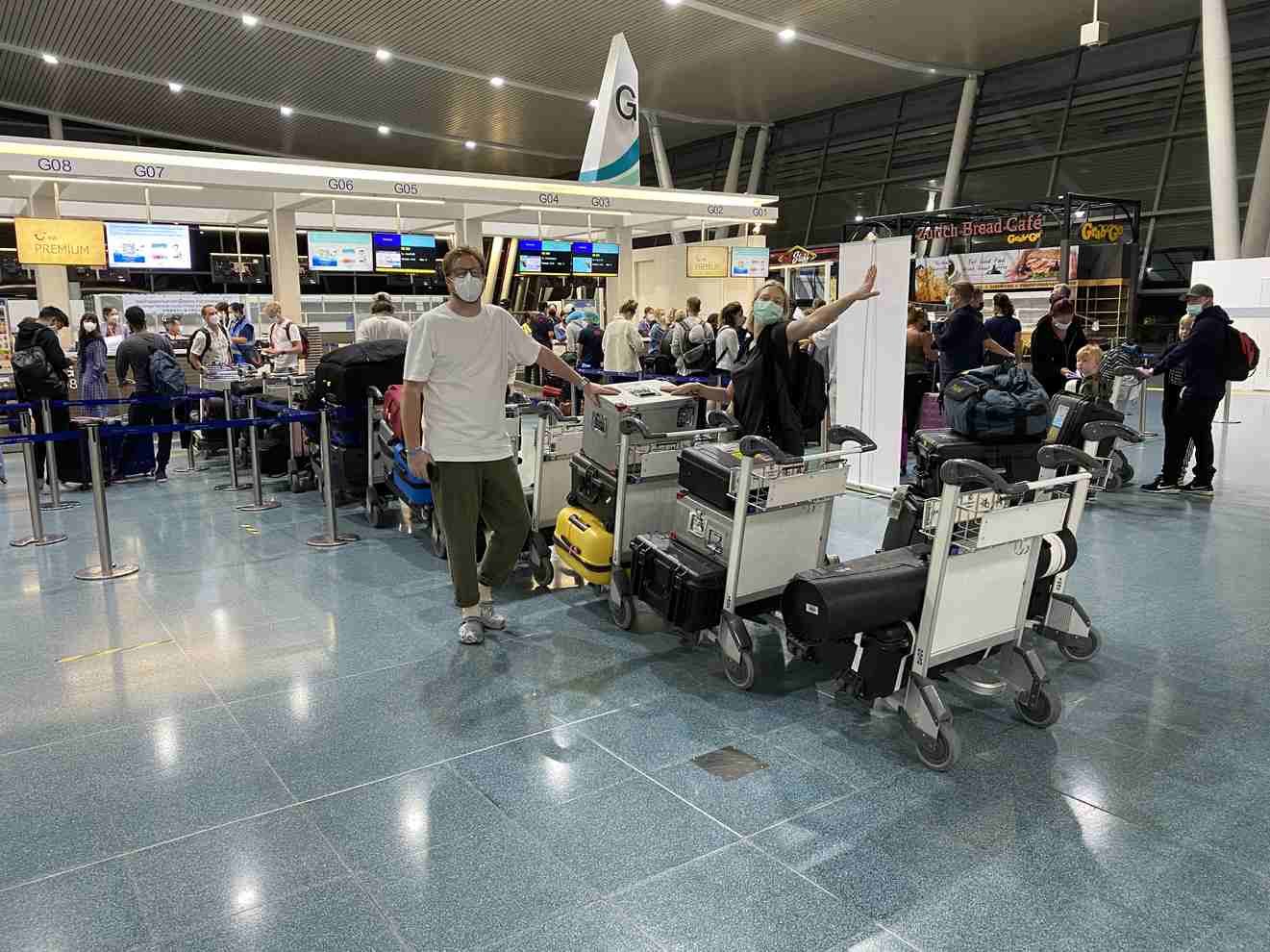
Thailand filming equipment logistics determines whether cameras, lenses, lighting, grip, sound and data systems reach each location ready to work. A technically correct list can still fail if it is packed into the wrong vehicle, held at customs, exposed to tropical weather or scheduled without enough loading time. Shoot in Thailand coordinates the equipment route with crew, permits and the call sheet so international productions can move through Bangkok, regional cities, coastlines and islands with fewer surprises.
Build one logistics map for the whole production
Start with every prep, shoot, travel and return address. Add loading access, parking limits, service lifts, stairs, boat transfers and local operating hours. Mark which department needs its equipment first at each stop. This reveals whether one truck can serve the schedule or whether camera, lighting, grip and generator vehicles must move independently.
Share the latest schedule through our contact and planning process. We review turnaround time as carefully as driving time because cases must be counted, charged, cleaned, backed up and repacked between days.
Local rental or temporary import
Local rental can reduce airline baggage, temporary-import paperwork and replacement distance. It also gives the visiting team access to technicians familiar with the supplied configuration. However, requested models, accessories, quantities and dates still need written confirmation. A camera name without the correct media, mount, power and support is not a complete package.
When equipment travels into Thailand, consult an experienced customs and freight specialist about the proper temporary-import route, serial-number lists, values, ownership documents and re-export obligations. Do not assume that professional equipment can enter as ordinary personal baggage. Build customs time into both arrival and departure plans.
Bangkok movement and loading
Bangkok offers strong rental and crew resources, but traffic, loading bays and building access affect the day. Hotels, offices, malls and high-rises may require vehicle registration, security lists, service-lift bookings and restricted loading windows. Some sites have no space for a large grip truck to wait.
Conduct a logistics scout as part of the location workflow. Record height limits, dock dimensions, lift size, floor protection rules, distance to set and the safest cable route. Schedule vehicles to arrive in the order they can unload. A smaller transfer van may be more efficient than forcing a large truck into a constrained property.
Regional cities, coasts and islands
Chiang Mai, Phuket, Krabi, Pattaya and other production areas have different travel patterns and local resources. Long-distance road moves require legal driving hours, fuel stops, secure overnight parking and recovery time. Island transfers may combine truck, ferry, speedboat and local pickup, each with separate weight and weather limitations.
Reduce unnecessary cases, but do not remove the backups that protect irreplaceable shooting days. Pack critical camera, sound and data items in the most reliable transport path. Send bulky stands, frames and expendables by an earlier route when appropriate. Confirm the last return ferry before approving a location schedule.
Choosing production vehicles
The source catalog includes 3-ton and 5-ton cargo-truck categories, camera cars, pickups, passenger vans and generator trucks. Vehicle choice should follow packed case volume, longest component, payload, access and department workflow. Count carts, ramps, ladders, textiles and cable as well as headline equipment.
Prepare a case manifest and vehicle diagram. Label cases clearly and assign one person to each load. The equipment needed at wrap should not block the first items required at the next call. Keep emergency rain protection, first aid, fire extinguishers and basic tools accessible rather than buried.
Generator and electrical logistics
Generator options in the equipment catalog range across truck-mounted and standalone capacities. Capacity selection belongs to a qualified electrical team after calculating fixture loads, distribution, cable lengths, phase balance, startup demands and contingency. Bigger is not automatically better: access, fuel, noise and exhaust also matter.
Confirm where a generator can park, whether the site permits it, how cables cross public or vehicle routes and who controls refuelling. Sound-sensitive interviews may need greater distance or an alternative power strategy. Wet-weather protection must cover the full distribution system, not only the generator.
Weather protection and equipment care
Thailand’s climate can shift from strong sun to heavy rain quickly. Provide fitted camera covers, lens protection, waterproof case covers, cable protection, absorbent materials and a dry staging area. Exterior lighting and large frames need weather monitoring and a plan to lower or isolate equipment safely.
Moving cold equipment from air conditioning into humid exterior air can cause condensation. Allow acclimatisation instead of wiping and shooting immediately. Coastal work adds salt and sand, so cases should remain closed when possible and equipment needs cleaning before repacking. These steps belong in Thailand filming equipment logistics, not as an afterthought for the camera assistant.
Batteries, charging and dangerous goods
List every battery type, quantity, watt-hour rating and charger. Airlines and freight providers impose specific rules on lithium batteries, terminals, packaging and cabin or cargo transport. Regulations change, so confirm directly with the carrier before travel. Do not ship an unidentified battery case and hope it passes inspection.
At the location, create a ventilated charging area with correct circuits and supervision. Rotate labelled batteries by department. For remote work, calculate a full day’s use plus contingency and verify whether local mains or generator power can support overnight charging.
Data transport is equipment logistics
Camera originals need their own route. Estimate daily data from codec, resolution, frame rate, camera count and shooting ratio. Provide primary and verification drives, checksum software, card readers, power and a protected workstation. Decide who signs cards in and out and when they can be formatted.
Keep verified copies with separate responsible people or vehicles where practical. Confirm whether uploads are realistic; resort or hotel internet may not handle large camera volumes. Plan the final drive handover, encryption and international travel with the same care as the camera body.
Crew communication and chain of custody
Assign department heads, vehicle captains and one production logistics lead. Use a live manifest for equipment leaving prep, arriving on set, transferring locations and returning to suppliers. Record damage or missing accessories immediately. Bilingual coordination helps visiting departments communicate with drivers, security, venue staff and local rental teams.
Clear ownership keeps Thailand filming equipment logistics accountable during company moves and overnight holds.
Our about page describes the service principle behind this process: each project receives a budget, team and plan suited to its actual scale. A small documentary may need a compact van and careful battery rotation; a commercial may need simultaneous grip, electric and camera movements.
Permits, drones and sensitive equipment
Technical footprint affects permissions. Cranes, track, generators, road rigs, large lights and drones may require additional location or authority approval. Give the permits team accurate dimensions, operating areas, hours and vehicle information. Concealing the real footprint can jeopardise both access and schedule.
Drones have separate regulatory, operator, airspace and location considerations. Confirm aircraft, camera, batteries, pilot credentials and intended coordinates early. Never treat a drone as an ordinary camera accessory that can be added after the location has been approved.
Backup strategy by consequence
Do not duplicate every item blindly. Identify failures that would stop the day: a single camera body, proprietary media reader, key focal length, radio link, generator component, ferry connection or data drive. Carry a replacement, an alternate workflow or a delivery plan for each critical point.
For remote locations, the replacement may need to travel with the unit. In Bangkok, a verified standby at the supplier may be enough. Document decisions so production, department heads and the client understand which risks are covered.
Final confirmation before the first call
Hold a logistics review after locations and equipment are substantially locked. Confirm manifests, serial records, insurance, contacts, vehicle plates, drivers, fuel, access bookings, crew call times, weather covers, charging, data, permits and returns. Issue one version-controlled movement plan rather than separate contradictory messages.
Check every assumption again when the schedule changes. Moving one scene can alter truck order, generator access, battery rotation and regional transport. The logistics plan is a live production document until the final case is returned.
Frequently asked questions
Can film equipment be delivered anywhere in Thailand?
Most production areas can be supported, subject to road, ferry, boat, weather and local-access conditions. Remote delivery needs more lead time, suitable vehicles and stronger backup planning.
Should an overseas crew bring its own camera package?
That depends on the exact system, customs, travel route and local availability. We compare temporary import with a locally sourced package and identify accessories that are safer to carry or rent.
How are equipment trucks chosen?
We calculate packed volume, weight, longest items, department workflow and location access. A 3-ton, 5-ton, pickup or van is selected from the real load rather than the equipment list alone.
What happens if rain stops an exterior setup?
The call sheet should include shelter, covers, electrical isolation, weather monitoring and a person authorised to pause work. Large frames and rigs require specific lowering or securing procedures.
Can you coordinate returns after an island shoot?
Yes. We schedule boat or ferry connections, mainland vehicle transfer, equipment checks and supplier returns, allowing for weather and travel buffers.
Plan the equipment route
Send the schedule, locations, crew movements and technical list to [](mailto:[email protected]). We will build Thailand filming equipment logistics around the real access, transport, power, weather and backup needs of your production.